Wednesday, February 15, 2012

Feminist literature scholar Pumla Dineo Gqola, after giving a talk at Traditions 2: Everyday Lives of African Men, Ethiopia 28-30 November 2011

  
Feminist literature scholar and cultural critic Pumla Dineo Gqola
Here is a short video clip of feminist literature scholar and cultural critic Pumla Dineo Gqola, after giving her keynote address at Traditions 2: Everyday Lives of African Men, held in Ethiopia on 28-30 November 2011. Her talk was titled "Feminist masculinities or suicidal men". She is being inteviewed by peace scholar and psychologist Shahnaaz Suffla of the University of South Africa-Medical Research Council's Safety and Peace Promotion Research Unit. Shahnaaz Suffla asks her to imagine a title and other aspects of a novel she would write on African men, if she were to think of writing a novel, for Pumla Dineo Gqola writes short-stories. 


Monday, February 13, 2012

Trapped in Fantasy

Whitney Houston has died, sympathy floods in. When Michael Jackson died, strangers shouted out of their cars, stopped me while I was on Broadway Avenue in Chicago, I received multiple texts. Clearly something momentous had happened. Top twenty people or I am not sure what they are that are followed on Twitter: Lady Gaga, Justin Bieber, Katy Perry, Shakira, Rihanna, Kim Kardashian, Britney Spears, Barack Obama, Taylor Swift, Selena Gomez, Ashton Kutcher, Ellen Degeneres, Nicki Minaj, Youtube Twitter stats, Oprah Winfrey, Marshall Mathers, Kaka, Justin Timberlake, Twitter en Espanol Twitter Stats, Chris Brown Twitter Stats.

Celebrity culture rules. I find it peculiar how much people who pretend for a living are valued. That is fundamentally what an actor and what singer is, isn't it, well they interpret stories and embody them for us, sort of projections of our imaginations and desires or something like that? If we value the story, then scriptwriters and songwriters should have the largest followings. But they are not, it is the blank canvas who is valued, empty until the story emerges through them. And if they do it well enough, we will assert that their interior life (and physical of course, I mean how will we know what the latest hairstyle is) is one worth following and watching and caring about. We consume what they consume, hoping that our acne scars and existential angsts will not be noticed if we wear a yellow jumpsuit like Peony Superstar. Yea, so its not always the story cos no-one is dressing like J.K. Rowling and having Rowling parties.

Instead it is mostly the fantasy figure we obsess about, feel for and try to emulate. So what is it we are doing when the reality of daily life loses its value and the most important people are unattainable parodies of themselves? And lets not forget celebrities are invariably larger than their own realities, so they are unattainable even to themselves. To clarify: they have been airbrushed and photoshopped and plucked and dressed out of their own schizophrenic existence. Julia Roberts cannot be Julia Roberts the star to herself, I am sure.

These people become spokespeople and examples for causes (like Houston for drug addiction and also an example of the black woman who becomes a crack momma cos of her violent black baby daddy)  and provide expert soundbites that often they are not equipped to discuss (like valuable nutrition advice such as the cayenne pepper diet). Don't get me wrong, there are worthy causes brought to light because of celebrities, after all it was through the interventions of musicians and singers that apartheid became anathema globally. Though Band-Aid should also be thanked for the idea of a perpetually starving, ignorant Africa as a village. Because celebrities (or the teams that manage and corporations or causes that use them) own the affect of the people and thus are influential.

What does it say about society though that we consistently value the fantasy over the real? And lets not be mistaken, daily life and reality does not have much value. If it did we would spend less money consuming the latest dress worn by Superstar Victoria pretending to be Posh whilst looking hungry and grumpy because of her low blood sugar and teetering on painful uncomfortable shoes to great acclaim and spend more time on wondering how the hell we care for the actual people around us.

Is it that reality is untenable? That reality is incomprehensible? I mean hell even the City Press asks you to send an entertaining article and most of the serious political news I got in the US was from Comedy Central. Is it that no-one has the attention span to engage with the world unless they are stroked in some way, made to laugh, made to love, manipulated into caring? I don't know.

I also know we love to hate them, love to see them fall, love to see them in pain. In some ways it is about our collective self-hate, our nihilistic, defeatist beliefs that no matter how powerful, beautiful or wealthy, life can still be crappy and one can only be on top for so long before failing. And we watch those falls, the humiliations, disgraces over and over again, no wonder we believe we can't change the life of the person around the corner. Cos, after all even if someone has everything, they will be a mess.  Except I always wonder why we are surprised that the people who pretend for a living fall apart when they have no privacy and everyone can see them, watch them. Its a contradiction, yes, of actors who strive for fame.


I wonder what would happen for instance if we were to tell people that there will be no more news about Richard Gere cos he touts for the Dalai Lama after the Secrecy Bill is passed, if there will be more outrage. I wonder if we were to say, you know, killing people in Iraq is bad because Superstar with Anglicised name would never have been born if they were bombing there x years ago or some such. We know that in the US, a really good way to get into politics is to be an actor first, cowboys and terminators are welcome.

Isn't it awful that people need movies and novels to entertain them into caring. Its as if collectively there is no imagination, no suffering until someone writes it for someone to pretend it. And then the most marvellous thing happens, we eventually after its fifteeen minutes forget the message pretended and focus on the pretender until the next pretense of celebrating a celebrity cause.

Well, you can tell I'm muddled. But hey, put it down to the grief of Houston's death.

Wednesday, February 1, 2012

Anger management: Mandela or Biko?

I've been having conversations about anger a fair amount recently. Anger gets a bad rap you know. Sometimes rightly so. However, if we take our affective states seriously and assume that our emotional responses sometimes are better indications of our relationship to the world and our responses to it than our thinking is, then all anger cannot be bad. Acting on anger without reflection is not so good. Being driven solely by anger is not so good. But so is ignoring anger.

There are different ideas about anger: anger being fear turned inside out; anger being a pathological response or a primitive response. Cultivating anger is to not follow the laudable Ghandi; not be a Nelson Mandela - the later version, the post-prison version. To be angry is to undermine the demonstrations of the natives' capacities for tolerance and to fail at the civilising mission.

If one thinks Mandela's and Ghandi's movements through the anger of a denied justice to the people they both served, with continuing poverty as an indicator of success or failure (depending on what you think blacks and Indian's deserve), then, well, the question is exactly what is so persuasive about what they did? Even Archbishop Tutu has been roused to glorious anger (by Mandela's movement's legacy).

Both these legendary icons, Mandela and Ghandi, transcended the idea of the native: vile, primitive, angry, destroyer and disrespecter of white civilization, misunderstander of the marvelous education at the hands of the refined whites who are genteel, and tolerant and loving. White racism is especially loving when they whip you for your edification. Or infantilise you to remind you of their advanced sensibilities and thus assert the injunction to learn at their soft unlaboring hands. Or when they ever so delicately shudder to think that the shitty hovels the majority of blacks live in is not good enough for their cousins/sisters/random white-faced person. Yet the civilised well-meaning white will declare with certitude that blacks could better themselves or, worse, that they are used to and like those living conditions. Or, well, my favorite evidence of loving, kind whiteliness are those presumptions that the mansions their struggling white selves are living in has nothing to do with the corrugated-frequently-burnt-down-scraps-of-nothing the majority of 'citizens' in this country live in; nothing to do with being maintained by normalised traditions of black hands and sweat at such great cost to the baas and madam; nothing to do with the fact that it would be impossible to have such a life without the cheap black labour. That's why comrade Malema's joke about white maids so tickles us. Now some of us living this fantastic whitely life bequeathed to us by Mandela, we know that our lives are maintained by the self-same cheap black maids, nannies and gardeners whom we pay just enough to move back and forth betwen their hovels and our magnificent residences. 

Why, we - and yes it is we blacks, hell yea - we especially really need the reflection of genteelness and steel to correct that unlove we learnt at the white breast the Mandelas and Ghandis bring to our natural tendency to be caterwauling carnival clowns jumping around maniacally popped up on our primitive rages while tsotsing for basic dignity. Aren't Mandela and Ghandi just so comforting for whites and the new black madams and masters, mostly in their ability to be better than the context that produced them expected, to become the modern-day secular Jesus with cheeks just waiting to be slapped by the non-angry crazy white people who created the conditions in the first place?

Even our new black governement hates that the enraged are not being Mandelaesque and are continuing traditions of protest that allowed him to be Mandela. And really why should they dare to do that, seeing as how the tolerant freedoms didn't turn their families into royalty with treauries to boot or forget that: the genteel un-angry negotiations of freedom didn't even turn them into citizens, except for election years, that is, and that should be enough, a nice cross like all literate people do is a wonderful gift.

Suppressing anger willy nilly without allowing its productive capacities to engender new possibilities to rouse oneself to those moments when your boundaries are transgressed, is to live without a meter of your self-worth. This anger isn't indiscriminate. I met an angry young man in December, one I haven't been able to shake. His anger was ugly. It was unreflective, as if he had forgotten the most basic premise for living, that wherever events occur in his life, he is part of the event, not outside of it. I recall that all he saw was the offence, his abused rights, his trampled dignity. Not once did he pause to accord that same right to dignity to the people room. Not once did his anger and so-called humiliations open the potentials of empathy to ask of his others: "what can I learn from you, even if it is to destroy an ugliness about me that you dare to say"? The funny thing is, he had more than he could ever experience, but his anger had blinded him to the reality of his privilege. He was more powerful than he could imagine, yet his anger rendered him powerless. He was beautiful to look at and compelling to hear if not for what his charisma was directed at. And what his anger produced was an epistemic kind of violence that built progressively and contaminated the room. So that is not the kind of anger I mean: unchanneled, misdirected and self-serving.

Biko seemed angry to me: it was a productive anger. It might have gotten him dead anger, but then he would rather have been dead and proud and klapping policemen back so that oppression would not be an easy task for the oppressor. We don't know how the years might have softened his anger or swelled it, we just don't. But he did get to leave us a legacy of dead and proud.

Anger wasn't about fear for Biko. Nor was it about the threat of humiliation.

Anger was about right and expectation and the certainty that to be human meant not accepting the klap and turning the cheek. About the fact that to be human meant to understand the right to dignity, the right to recognition and mostly and, so reductively, that anger was about marvellous, wondrous and a deep, deep self-love, self-respect and an affirming kindness to the self.

For Biko anger was, and for me anger is about giving kindness where it was, is, due; anger is about making alliances across boundaries of injustice to practice self-love and love for an other that too has been trained in traditions of self-hate and disparagement. Anger is in service of love without forsaking the fury and rage in the places it belongs: with those who are hateful, with those who are unwilling to love and care based on dermal evidence, with those who need to make a superior/inferior self through hateful Apartheid ideologies.

It seems an awful choice for us mere humans, if our anger only enables us to be martyrs or secular prophets. No, I think we need to learn that middle-ground. We need to learn to both value and control our anger so as to marshal its productive capacities. There really is more than enough room for raging against the machine. Why aren't more of us angry? I love Mandela still, but I can't understand how he brought us here.

Tuesday, January 17, 2012

Retrospective 2: Traditions II: Everyday Lives of African Men

Jimmy Manyi

One of the relatively big stories of 2011 was triggered by the comments made by Mr Jimmy Manyi, President of the Black Management Forum and Head of Government Communication and Information Services. The story went big because of the protagonists, but also for the reason that it was yet another dreadful replay of the effects of the inherited misunderstandings of the racialised past that made us into who we are.

Like other ugly stories of race, Manyi’s words and the exchanges that followed entrapped our imaginations because they played on the masochism and misrecognition that, since apartheid at least, have become an unhappy part of black traditions. I also suspect that the story was a salutary lesson on the unrealised hopes and persisting uncertainties of what it means to be us in this suspended present moment.

Occupying the position of director-general of the Department of Labour at the time, Manyi had expressed the view on KykNet's Robinson Regstreeks show in 2010 that coloured people “must stop this over-concentration situation (in the Western Cape) because they are in over-supply where they are so you must look into the country and see where you can meet the supply”.

Trevor Manuel

One of the political figures who was angered by the comments and publicly responded to Manyi was the minister in the presidency Mr Trevor Manuel. To Manuel, Manyi was “the worst-order” racist, formed “in the mould of HF Verwoerd”.

In turn legal adviser to the minister of defence, Mr Paul Ngobeni, known to have been part of the “brains trust” that helped President Jacob Zuma during his corruption case, came blazing out in support of Manyi. Ngobeni said Manuel a gangster and racist.

The tone of the whole affair was rather unsavoury, from start to end. It is sometimes inevitable that such eruptions will happen, given the continuing trauma inhering in our identities. Still, because of what this regrettable exchange says about us as black people, I found it instructive about how not to think or talk about others.
Yet even though the subject of racial feelings and thoughts is something one does not carelessly broach in polite company, we could still have taken the opportunity to learn, and teach other especially younger people, about how we got here. We could still have fruitfully used the apparent possibilities even while recognising the hurt that Manyi caused in many black or coloured-identified people.

I am also aware, as all the central actors in this story might well be, there are many older people of all hues and creeds who could use some considered lessons about what apartheid racialising and tribalising traditions we employ to identify ourselves continue to do to our language and interior lives.  

The Manyi-Manuel-Ngobeni affair came back to mind at Traditions II, the second travelling pitso held in Ethiopia on 28-30 November 2011 by the University of South Africa’s Institute Social and Health Sciences. Hosted under the theme of Changing Traditions: Everyday Lives of African Men, the biennial tradition pitso is one of the pillars of the Changing Traditions Project which emerged, among other things, from amongst others the observation that there tends to be an incapacitating conflation of tradition and traditionalism.
Delegates at Traditions II: Everyday Lives of African Men 
held in Ethiopia on 28-30 November 2011

During the discussions, when highly emotional disagreements as well as serious distortions became apparent, I was reminded of one statement by Ngobeni that should have but never got much discussion. Ngobeni said Manuel acted as though he was “the king of coloured people”.


Clearly intended to offend, the sentiment plays on the untruth that those who claim a coloured identity do not have a cultural tradition, specifically not one of kingship.

This unfortunate miseducation about tradition which parses coloureds as cultureless is one which I have encountered also in my interactions with coloured-identified students when I used to teach at the University of the Western Cape. I am afraid it is far more common than that though, widely believed among many old and young people identified as African.

The idea that a people who have roots traceable to at least more than 450 years old in South Africa can be without tradition or culture is plainly incorrect, besides being offensive.

Yet this lie that only some people – specifically those who were once referred by apartheid laws as Bantu – can claim the right to be recognised as a traditional community is the very one freighted by the South African laws on traditional leadership and governance. These laws, to be clear, have the unwitting purpose of primitivising or retribalising ethnicity on the one hand, while also denying the equal fullness of the traditions of coloured-identified people on the other.

What baffles me is how a politically black democratic government fails to realise that the groupings brought under the term traditional communities in post-apartheid South Africa are the very same abhorrent tribes Archie Mafeje showed in the early 1970s to have been the creation of colonial rulers and racist anthropologists.

Let us be clear then that identifying as Zulu or Venda does not necessarily make you a tribesman or tribeswoman, just as being identified coloured or white does not by itself make you a tradition-less post-modern subject. Surely being an indigenous native speaker of isiZulu does not mean you have more traditions than being a native English-language speaker.

Perhaps the argument the dominant discourse on black traditions wants to convince us of is that those who were once Bantu are more strongly tied to their cultural traditions than others. That also is not quite true, for Europeans and North Americans may be said to have stronger traditions precisely because these tend to go unremarked, and often do come under the rubric tradition. It is when a tradition does not call itself a tradition, such as in eating with a fork and knife or calling ourselves by our race names, that it is almost unchallenged in its power over us.

Yet it also needs stating that to be black in the way black South Africans are black is very modern political tradition, but a tradition nonetheless. Furthermore, being black, because it is political identity, does not have ready correspondence with ethnicity. Indeed all racialised identities are first and foremost political identities. 

The fact is while all rituals are part of a tradition, not all practices within a tradition are ritualised. Tradition, that is to say, is not about primitives, pure tribes, traditional communities, kingships or whatever object a person or government wishes to employ to refer to the alienating Otherness we have become used to and use on ourselves.

Tradition is the basic question that all of us try to work from the moment we become cognitively capable of recognising both our individuality within and connectedness to our families, what remains unarticulated in our interactions with each other. Whereas we tend to think of tradition as that practice, rite or custom we do once a year or in a longer while, like being initiated into manhood, celebrating Christmas or Eid, paying mahadi, or burying the dead in a particular way, at its most productive moments tradition is what goes unspoken. Like gravity, tradition is the force that holds down the responses of the insiders to the tradition to the everyday problems of being human.

Though they may be out of sight, traditions are always an underlying dynamic in any practices where one person consciously or otherwise seeks to hand down – this being the principal meaning of the term tradition – the usable parts of a culture, whether that behaviour is what to eat, how to pray, who to love and how, the best way to raise children and how to raise them, and of above all how to be a person in the world of others.

Being at the centre of these traditions lipitso I have become even more aware that there is a great deal of ignorance, confusion and distortions that exists about what traditions mean. It is especially when one tries to square up the very modern, highly improvised, daily lives of black men and women in the Africa of today with how tradition is apprehended that one comprehends the misconceptions, myths, and caricatures that dogs our lives. Black men and women are perhaps the most post-modern subjects of all, and that does not negate that they can and may need to recognise where they have been.

However, it must be said, the paradoxical pull for many to define traditions in barely concealed tribalistic or racialised terms may be due to the uncertainties first provoked by imperialism and colonialism as well as the search for an elusive search for an old wholeness that may or may not have existed before those racist ideologies gutted our cultural life supports.

The Changing Traditions Project was conceived with the aim that, if we want to contribute in building Africa one figurative kgotla at a time, we have to set time aside whenever we can to help each other to more carefully think through what tradition means. We all need to carefully figure out and where necessary rethink what our traditions are, and that done, build on our best. Careless words, lazy thought and insulting each other are not the best way to build one other and our collective black lives.

Monday, January 16, 2012

Refashioning the local: Black masculinity, class and clothing

The latest issue of the South African feminist journal Agenda has published my article on masculinity and clothing as signifiers of race/class identity. One of the questions that motivated the study was to explore why poor black men spend so much money on clothes. Though reductive, my argument is that despite their socioeconomic status, young men in the townships seek to produce powerful self-images through expensive, designer clothing. Their clothing and the discourses they value and perpetuate around clothing (such as masculine individualism) are derived from a model of masculinity found in the magazines they read. The upper-class masculinity in Gentleman's Quarterly provides an imaginary of masculinity which participants deployed to resignify their class aspirations. The abstract can be found here:
http://www.tandfonline.com/doi/abs/10.1080/10130950.2011.630578

Thursday, December 22, 2011

Retrospective 1: Traditions II: Everyday Lives of African Men

Traditions II: Everyday Lives of African Men was held in Addis Ababa on 28-30 November 2011. The event came after a long year of planning, near-disasters, miracles, obstructive bureacracy and of course wonderful people who negotiated institutional limits and boundaries. As you can tell, it was a mixed bag of highs and lows.

Following the conventions of events planning meant we needed to do certain things, that is, adhere to the traditions of academic conferences. The people must eat, must have somewhere to sit amidst the pondering and presenting, not worry about where they will sleep at nights or put on their armour of silks or sackcloth, have ample water and heat to bathe, must be moved from one point to another. Now, of course humans are social and biological and these logistical things are just part and parcel of the work of bringing people together. The traditions, resistances and compliances to mores and conventions are in the details though.

Traditions II delegates in Africa Hall
The space should surround one with the requisite institutional gravitas that the work of pondering, expounding and so forth presumably necessitates. We chose two venues. For the first day, the UNISA  Regional Learning Centre in Akaki, and so infrastructure became indicative of and showcased the transcontinental reach of our institution and the relationship to minds, hearts and bodies coming together. Maybe it was a choice of institutional power too and thus our ability as representatives of the institution to effect the making of tradition. For the second and third day, we were located in Africa Hall at the United Nations Economic Commission for Africa in Addis Ababa. It is a space of now historic power. The room is reminiscent of a different era and that sense of history and time past almost lulls you into forgetting that traditions were made in this room that affected the lives of millions of Africans, the legacies of which we still contend with. Or rather one should say it is a space where history slipped practices of everyday life quietly into tradition; the dry centrifugal and yet contingent policies of states transforming the possibilities of livelihoods, romances, parenting, healthcare, travel and transportation, entertainment and who knows what else happens in rarefied spaces.

And yes, the price of corn does affect tradition. If corn is too expensive, and monocultural farming practices are enforced by global politics using Africa as a breadbasket to produce its wheat, then more people will eat bread and develop ritual practices around now scarce corn or to centralise the necessity of the wheat sheaf. The woman who insists on practicing outdated or new modes of food production in the domestic or household economy when she can no longer find corn might be scorned by her in-laws for being old-fashioned or modern, not get sex from her ravenous for corn/wheat husband for her dis/respect for traditions, will be unable to pass on her embodied histories via tradition to her children or grandchildren, has to renegotiate the caregiving and health practices that was enabled by corn production or fava beans if you will, has to make new circuits of bringing food to the home due to the un/availability of seed for corn/wheat or now go to the super baker of wheaten bread three roads or houses or neighbourhoods over rather than the has-been corn muffin old lady down the road, has to cook and experiment with new foods for the feasts and who knows what else. So yea, the space was meaningful. Does sound like a well-considered decision to have held it there, given the corn/wheat dilemma.

Did I tell you we fell in love with the space? The room is just beautiful too. At our first meeting with the space we gushed about history, and the artwork and the maroon velvet sofas and blue chairs and the enormous mural with only men in it. It is a man's space, this incredible room. Men at the apex of power making masculinities in obscure ways. For an academic conference,  that sought a renegotiation of praxis around African masculinities and tradition it was a marvellous space.

So, post-conference why have I not waxed erudite about the content of the conference and instead gone on and on about the spaces? Why am I not cataloguing the facts and themes and being all academicky about the presentations? The simple reason is I am still processing. The more complex one is that it is not possible to contain experience, no matter how gravitas-inducing the space. Memory is selective and reproducing Traditions II as tradition will be contained by the outcomes of the negotiation of memory. And that perhaps  is tradition in practice ...

Monday, December 12, 2011

The almost totally new black manifesto for dummies continued: 2 more things to remember in a world where blacks are free to be who they want to be


7. A critical black consciousness - here meaning a critical consciousness about all what being black entails - does not just bubble up from the biological fact of one’s body. There is not ready-made relationship between a person’s skin colour and her thought about the ideological meaning of skin colour. Dark-skinned can be - well, anything. Sometimes that thing is great. At other times it is something not to be proud of. The same applies to Africanness of course. One does not develop a questioning attitude about what Africanness mean because one lives in Africa or is referred to or refers to herself as African. Indeed, this unsettled relation between body and thought, physical location and intellectual view, holds for all identities historically oppressed or marginalised by European, patriarchal, capitalist, (hetero)sexist and racist power: a black lesbian woman does not become radically feminist simply because she has endured sexist violence all her life, and a rich African boy might not necessarily turn out to be the enemy of the poor. Even while ‘there is no doubt that the pain is always felt more by those who lives with oppression than those who have intellectually converted to the cause of the oppressed” then, as Fikile-Ntsikelelo Moya has said, a critical view of the state of the metaphoric black-and-white world needs nurturing, arises out of deliberation.

 
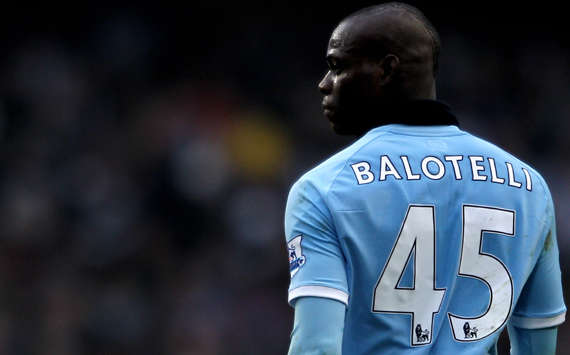
8. Ghanaianness isn’t part of anyone’s make up, you don’t pass on Ghanaian DNA to your children. Percy Zvumoya said that in a well-thought piece on the Italian Mario Balotelli in the Mail & Guardian. Of course he is right that Ghanaianness isn’t genetic. However he is wrong that you can’t pass Ghanaianness to your offspring. Yes you can, just as you try to pass on Balotelliness, Italianness, Africanness, blackness or any other sense of collectiveness. It isn’t only our DNA that we pass on to our issue, because it’s not only biologically that human beings try to reproduce themselves. Because we are aware that children come into the world as strangers, it is not enough that they have our genetic material. We also want them to have our way of life. We want them to learn to see the world, themselves, us and others the way we see things. We induct them into our language. We hand over our memories, and pray they will not be betrayed. We pass on out tastes, aspirations, fears, dislikes and hopes. That is what tradition is all about. And that’s the only way Ghanaians, Africanness, Italianness, blackness or any collective sense of us-ness, that thing we refer to us culture, can manage to live on when we are gone.